

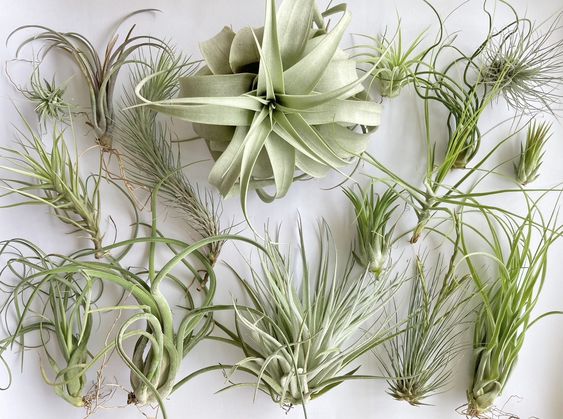
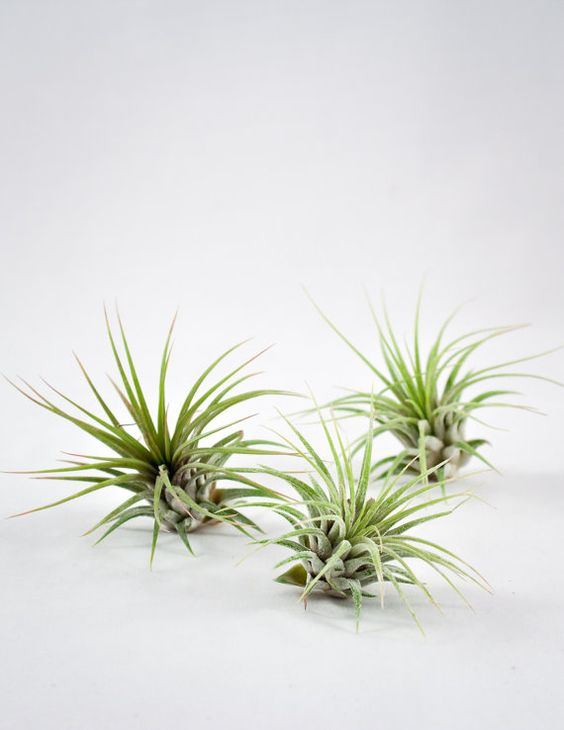
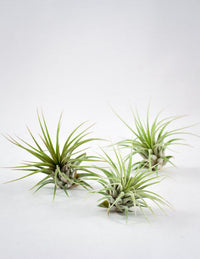


Air Plants - Assorted Tillandsia
Price:
$3.99
Regular Price
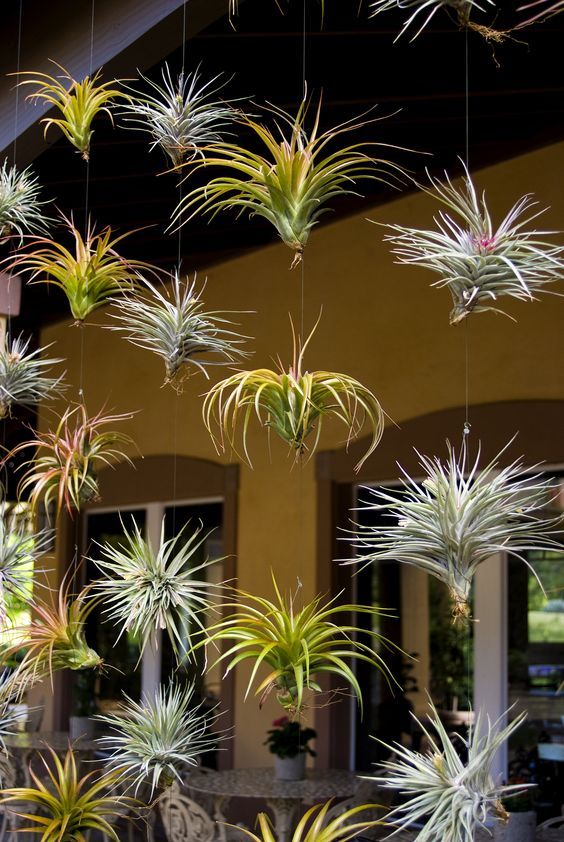
Tillandsia, also known as "air plants" or "Tillandsia air plants," are epiphytic plants that naturally grow on supports such as trees or rocks, without needing soil. Here are some tips for caring for these fascinating plants:
-
Light: Tillandsia need bright indirect light to filtered direct light. Avoid direct exposure to scorching sun, as this can burn their leaves. A window with bright indirect light is often ideal.
-
Watering: Tillandsia are air plants that absorb moisture and nutrients through their leaves. To water them, you can soak them in demineralized water, rainwater, or non-calcareous tap water for about 30 minutes, once a week in summer and less frequently in winter (every 2 to 4 weeks). Gently shake the plants to remove excess water after soaking.
-
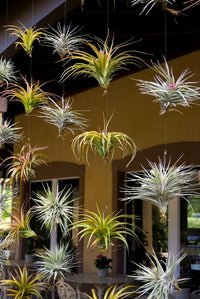
Humidity: Tillandsia need relatively high humidity. If you live in a very dry environment, you can lightly mist them with water between soakings to maintain adequate humidity. You can also place them in a more humid bathroom or kitchen.
-
Temperature: Tillandsia prefer moderate temperatures, generally between 15°C and 30°C. Avoid temperatures below 10°C, especially in winter.
-
Fertilization: Tillandsia do not need much fertilizer. You can feed them by adding a specially formulated Tillandsia fertilizer to the soaking water once a month in spring and summer. Avoid over-fertilizing.
-
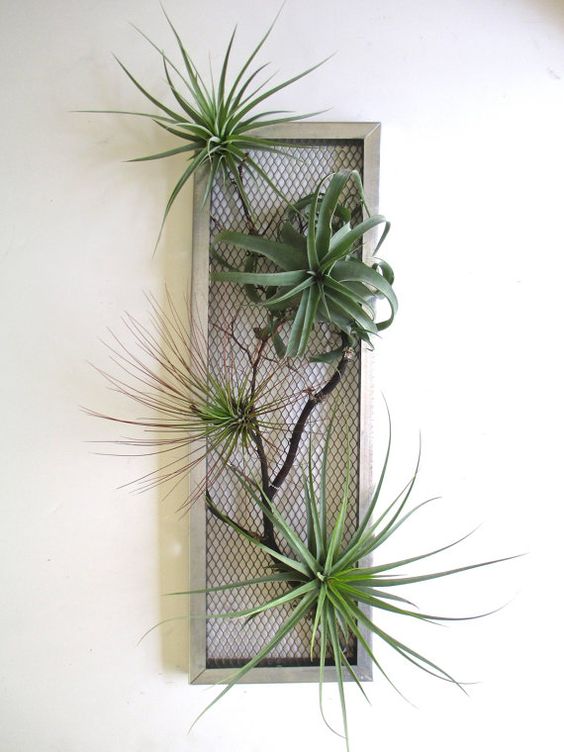
Repotting: Tillandsia do not require repotting in the traditional sense as they grow without soil. However, if they become too large or lose their shape, you can adjust them by attaching them to a new support using fishing line or plant glue.
-
Propagation: You can propagate Tillandsia by dividing the pups that form around the mother plant once they reach a sufficient size.
-
Maintenance: Tillandsia may need occasional cleaning to remove dust and impurities. You can gently rinse them under lukewarm water or gently shake them.
-
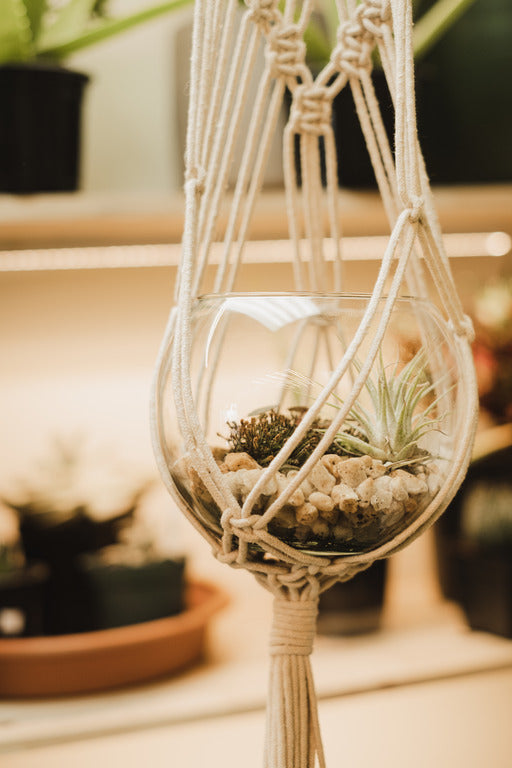
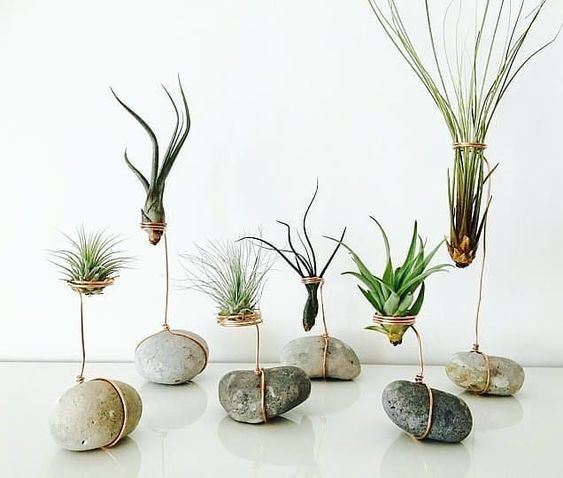
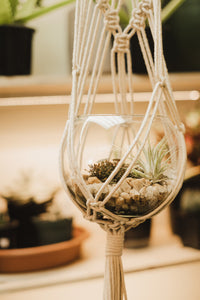
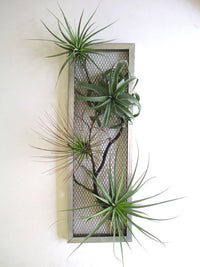
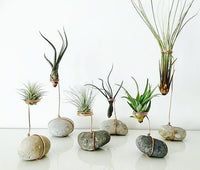
Supports: Tillandsia can be placed in oyster shells, pieces of wood, stones, or any other airy support that allows them to breathe. Make sure the support is dry after watering to prevent rot.